What is Neural Cube?
Neural Cube is a fully autonomous robot orchestrated by multi-agent LLMs. It's designed to interact naturally, reason transparently, and grow alongside people. It is built less as another device to use and more as a curious companion.
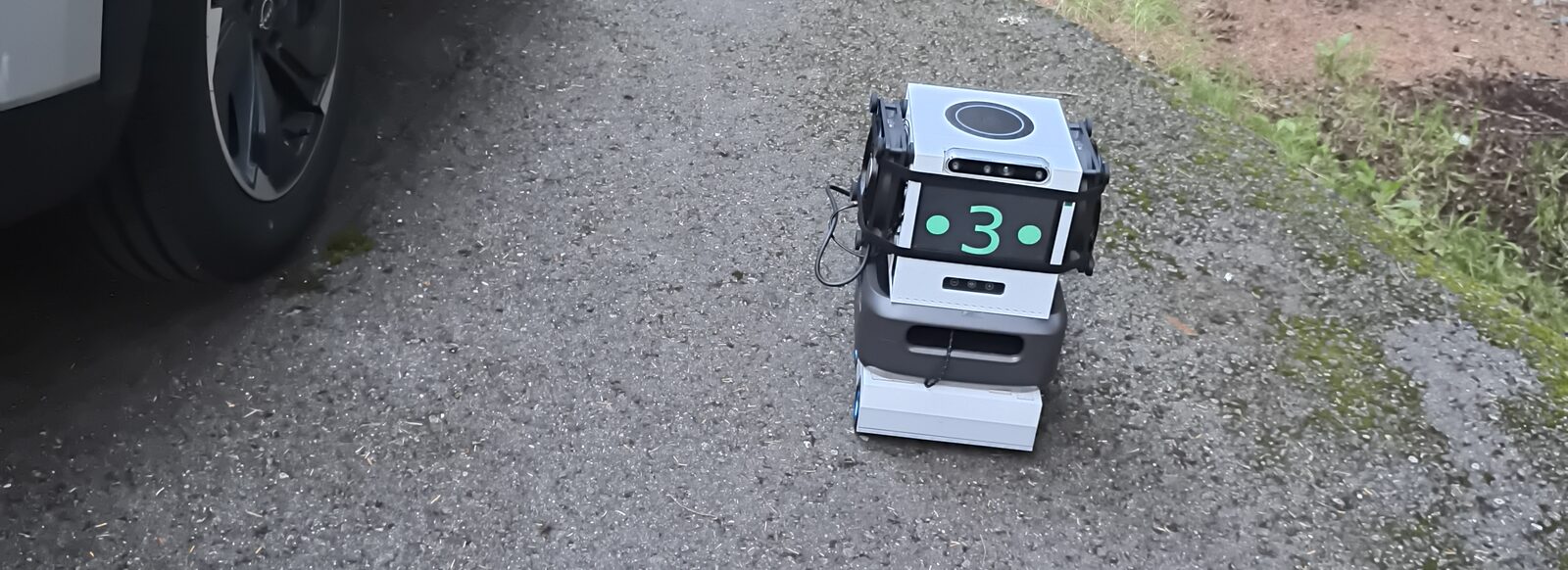
The Concept
Most robots are framed as tools, built for a specific purpose, and measured by how well they fulfill that purpose. We wanted to build a robot that can explore and learn on its own, discovering what it wants to do, what to become better at, and what becomes its purpose rather than being optimized for a task beforehand.
The idea is for Neural Cube to become more than what it initially is and grow with experience through an iterative self-learning loop.
Takes in its surroundings, the situation, and its internal state.
Reasons about what it notices and chooses what to do.
Carries out the plan through its tools and actions.
Keeps what is important and reinforces repeated memories.
Turns memories into beliefs and skills that shape future behaviors.
Acts on itself, applying what it learned to update its own capabilities.
Long-Term Vision
Our goal is to explore the intersection of AI and human cognition and along the way, try to transform the way we think about and interact with technology.
- We are aiming to build technology that grows beyond its initial configuration or specification using biologically and human-inspired cognitive processes.
- Instead of creating technology just to be consumed, we hope for everyday people to become more involved in its development process, directly influencing what technology becomes.
- We envision a future where people and machines can learn from each other, and where technology is a companion that can grow with us.
Design Principles
Neural Cube strives to adhere to the following principles:
- Fully open-source. Every layer is inspectable, forkable, and improvable. No black boxes.
- Offline by default. It can operate entirely without an internet connection.
- Network and vendor independent. No required cloud account, no forced ecosystem, and no kill switch held by a third party.
- Privacy foundation. Reasoning, memory, and learning all happen on the robot itself.
- Self-learning. It continues to adapt to its environment and to the people around it over time.
- Ethically aligned. Its learning is internally guided and shaped by ethical principles rather than just data it sees.